

Debt collection is becoming more difficult to manage at scale. Delinquency volumes are rising, follow-ups remain inconsistent, and compliance requirements continue to tighten under frameworks like the FDCPA and Regulation F.
Most businesses respond by adopting digital debt collection software to bring structure into the process. It helps automate outreach, standardize workflows, and improve visibility into recovery performance. But the biggest gaps still appear in execution, with follow-ups delayed, prioritization off, or outreach failing to adapt to customer behavior.
Execution quality directly impacts outcomes. A 2024 McKinsey & Company report shows that organizations using advanced AI in collections can cut costs by up to 40% and improve recovery rates by around 10%. Such results come from better timing, smarter prioritization, and more effective customer engagement. This is what a debt collection software is designed to enable.
In this guide, we’ll compare the best digital debt collection software platforms in 2026, how these tools differ, and what businesses should evaluate before choosing a platform.
Contents
- 1 Quick Comparison: Best Digital Debt Collection Software
- 2 How We Evaluated The Best Digital Debt Collection Software
- 3 Best Digital Debt Collection Software in 2026
- 4 How to Choose the Right Digital Debt Collection Software Platform?
- 5 Scale Digital Debt Collection Without Overloading Internal Teams
- 6 FAQs
Quick Comparison: Best Digital Debt Collection Software
Modern collections operations are no longer driven solely by outbound calls. Recovery teams now need platforms that can coordinate omnichannel communication, automate follow-ups, adapt outreach based on customer behavior, and maintain compliance across large account volumes.
The platforms below approach the debt collection management system differently. Some focus on workflow automation, while others emphasize AI-driven engagement or receivables.
Let’s compare the top debt collection software platforms in 2026.
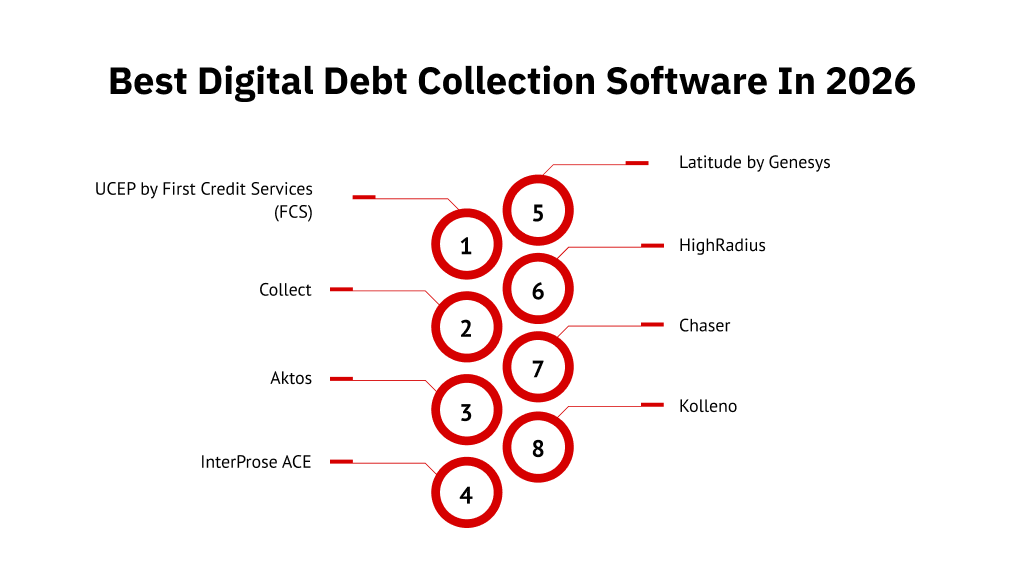
| Tool | Best for | Core Strength | Communication Approach | Deployment Model | Pricing Model |
| UCEP by FCS | Enterprise recovery operations | Managed digital collections execution | Omnichannel digital engagement | Managed service with white-label support | Contingency-based pricing for third-party collections; digital-first and per-seat pricing options for first-party support |
| Collect | Collection agencies and legal recovery teams | Structured workflow management | Traditional workflow-driven outreach | Cloud and on-premise | Custom quote-based pricing |
| Aktos | Fintech and digital lending teams | AI-driven account prioritization | Behavior-based digital communication | Software platform | Custom enterprise pricing |
| InterProse ACE | Banks and credit unions | Compliance-focused collections management | Structured recovery workflows | Enterprise software deployment | Custom enterprise pricing |
| Latitude by Genesys | Contact-center-led collections teams | Integrated collections and contact-center operations | Voice and multi-channel outreach | Enterprise platform deployment | Custom enterprise pricing |
| HighRadius | Enterprise AR and invoice collections | Accounts receivable automation | Invoice and payment-focused communication | Cloud-based enterprise platform | Enterprise subscription pricing |
| Chaser | Mid-sized finance teams | Automated invoice follow-ups | Email-centric payment reminders | Cloud-based SaaS | Tiered SaaS pricing |
| Kolleno | Businesses automating invoice recovery | Self-service payment workflows | Multi-channel payment communication | Cloud-based platform | Subscription-based pricing |
How We Evaluated The Best Digital Debt Collection Software
We evaluated these platforms based on how effectively they improve recovery operations, support automation, manage compliance, and handle growing collections volumes.
The key factors we considered were:
- Omnichannel communication support
- Workflow automation capabilities
- AI-driven account prioritization and engagement
- Self-service payment functionality
- Compliance and audit visibility
- Operational scalability
- Integration flexibility across CRM, billing, and payment systems
Best Digital Debt Collection Software in 2026
To help you evaluate the right fit for your recovery strategy, here’s a detailed look at the top digital debt collection software platforms in 2026.
1. UCEP by First Credit Services (FCS)
First Credit Services offers the Unified Consumer Experience Platform (UCEP), an AI-powered digital debt collection platform designed for organizations managing high account volumes and complex recovery operations. It centralizes digital engagement, payment resolution, and managed recovery execution within a connected collections environment.
Key strengths:
- Omnichannel communication orchestration: UCEP coordinates outreach across SMS, email, IVR, chat, self-service portals, and voice workflows through unified engagement strategies.
- AI-driven engagement workflows: The recovery platform uses automated decisioning and engagement logic to optimize communication timing, prioritize accounts, and personalize outreach strategies.
- Self-service payment and resolution: Consumers can review balances, manage payment plans, and resolve accounts through digital self-service experiences, helping reduce dependence on agent-assisted interactions.
- Compliance-aware recovery management: UCEP centralizes communication governance, interaction tracking, and workflow oversight to support FDCPA- and Regulation F-aware operations across large-scale recovery environments.
- Managed, white-labeled recovery operations: Unlike software-only collections tools, FCS operates UCEP directly on behalf of clients through managed recovery services. Organizations can maintain a branded customer experience while reducing internal operational strain.
How FCS Supports Modern Digital Collections Operations
Collections teams are under pressure to improve recovery consistency while managing growing account backlogs, compliance requirements, and changing customer expectations.
Many organizations are moving toward more adaptive recovery models that support digital engagement, self-service payment experiences, and scalable execution across large portfolios.
FCS’s implementation
- Unified digital and voice outreach within connected recovery workflows
- Applied automated engagement strategies based on customer behavior and delinquency stage
- Enabled digital self-service payment and account resolution
- Centralized communication management and workflow oversight
- Operated white-labeled recovery workflows directly on behalf of clients
- Supported both onshore and offshore operational coverage
Results:
- Improved engagement across digital channels
- Faster and more consistent outreach execution
- Reduced dependence on manual follow-ups
- Better scalability across high-volume recovery operations
- Reduced operational burden on internal collections teams
- More consistent customer experiences throughout the recovery lifecycle
FCS works best for healthcare providers, banks, fintech lenders, utilities, subscription businesses, and enterprise organizations managing high-volume recovery operations.
Many collections automation platforms focus mainly on workflow automation or account tracking. UCEP takes a broader operational approach by combining consumer engagement, managed recovery execution, compliance oversight, and white-labeled collections support within a single recovery environment.
If you are evaluating digital debt collection software, prioritize platforms that can improve engagement, support scalable recovery operations, and deliver more flexible customer experiences across the collections lifecycle.
Want to know how UCEP supports modern recovery operations? Schedule a quick call.
2. Collect
Collect is a debt recovery software that helps teams manage collections workflows, track delinquent accounts, and automate follow-up activities. It enables organizations to manage collections internally and have more structured operational visibility across recovery workflows.
Key strengths:
- Workflow automation and account management: Collect allows teams to automate reminders, follow-ups, payment tracking, and escalation workflows.
- Centralized portfolio visibility: The platform provides a unified view of account activity, payment history, communication logs, and collector actions to monitor account progress and recovery performance.
- Flexible deployment options: Offers both cloud-based and on-premise deployment models. This gives organizations more flexibility depending on their operational and infrastructure requirements.
- Integrated payment processing: Supports payment management workflows that allow organizations to process payments, manage arrangements, and track account resolution activity within the collections environment.
- Agency and law-firm support: Provides structured workflows, account organization, and operational reporting capabilities to collection agencies and legal recovery teams.
While Collect provides strong workflow and account management functionality, there are a few operational considerations to evaluate:
- Focuses more on workflow management and operational organization than AI-driven engagement.
- Communication workflows are less adaptive compared to newer digital-first collections platforms.
- Large-scale recovery operations may require additional operational support and workflow optimization outside the platform itself.
Best for: Collection agencies and legal recovery teams needing structured account and workflow management.
3. Aktos
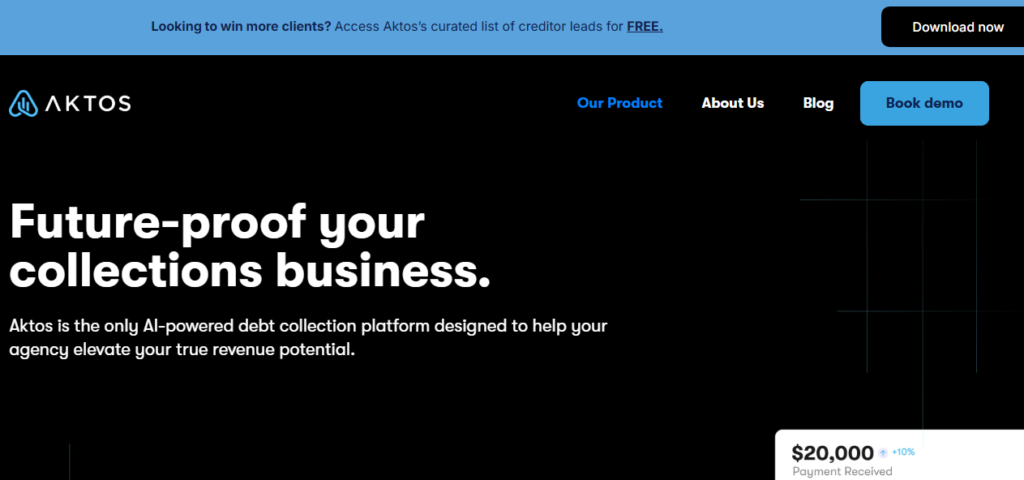
Aktos is an AI-powered automated collections platform designed for lenders, fintech companies, and financial institutions managing high-volume recovery operations. It combines workflow automation, machine-learning-driven segmentation, and digital communications to improve collections efficiency and prioritize recovery efforts.
Key strengths:
- AI-driven account segmentation: Aktos uses machine learning models to segment accounts based on repayment behavior, delinquency stage, and recovery probability to prioritize higher-impact accounts.
- Automated collections workflows: The platform supports automated follow-ups, payment reminders, escalation workflows, and configurable dunning strategies across large collections portfolios.
- Digital communication capabilities: Aktos enables outreach across SMS, email, and voice workflows for consistent communication across collections operations.
- Behavior-based collections strategies: The platform uses customer behavior and repayment trends to optimize outreach timing and engagement strategies.
- Analytics and recovery insights: Aktos provides portfolio-level visibility and analytics dashboards to monitor recovery performance and delinquency trends.
While Aktos offers strong AI-driven automation and segmentation capabilities, there are a few operational considerations to evaluate:
- Focuses more on workflow automation and collections optimization than managed recovery execution.
- Complex recovery environments may still require additional operational oversight and compliance management.
- Performance depends heavily on customer data quality and workflow configuration.
Best for: Fintech and digital lending teams using AI-driven collections automation and account prioritization.
4. InterProse ACE
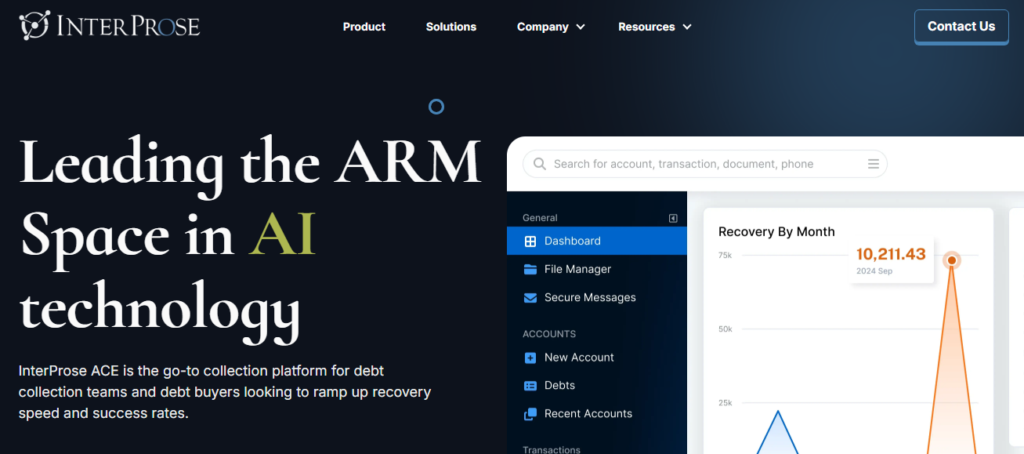
InterProse ACE is an enterprise collections management software made for banks, credit unions, and regulated financial institutions managing large delinquency portfolios. It offers collections workflow management, compliance oversight, account segmentation, and recovery operations across complex financial environments.
Key strengths:
- Compliance-focused collections management: ACE provides centralized communication tracking, audit trails, and workflow governance to help organizations manage compliance-sensitive recovery operations more consistently.
- Configurable collections workflows: The platform allows teams to customize workflows, account routing, escalation paths, and recovery processes based on operational and regulatory requirements.
- Account segmentation and prioritization: ACE provides account scoring, segmentation, and queue management to prioritize collection activity across delinquency stages.
- Enterprise-scale portfolio management: Supports large account volumes, multi-branch operations, and complex recovery environments commonly seen in banking and credit union collections.
- Integrated reporting and operational visibility: ACE provides reporting dashboards and recovery analytics to monitor collector performance, delinquency trends, and operational efficiency.
While InterProse ACE offers strong workflow control and compliance management capabilities, there are a few operational considerations to evaluate:
- Focuses more on structured collections management than AI-driven engagement workflows.
- Advanced digital engagement or managed recovery support may require additional tools.
- Implementation and customization can require higher operational involvement.
Best for: Banks and credit unions managing compliance-heavy enterprise collections operations.
5. Latitude by Genesys
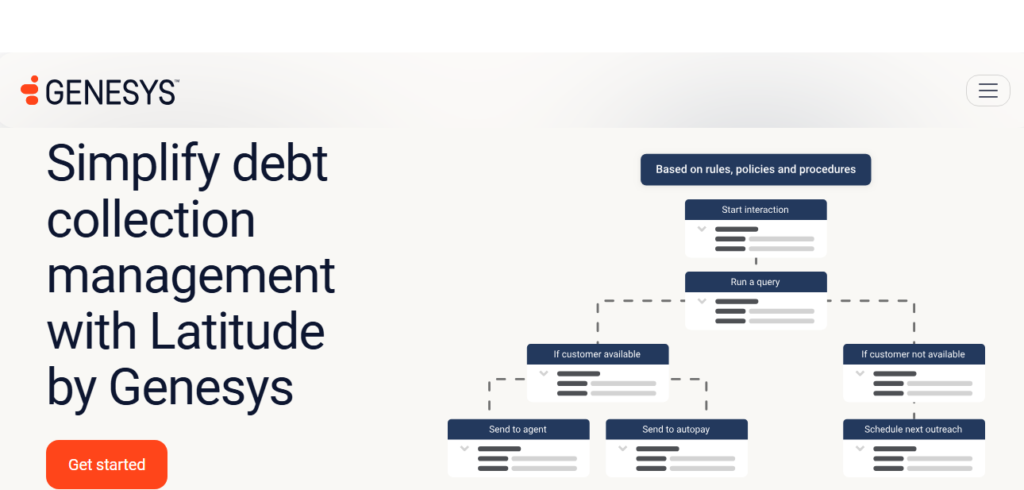
Latitude by Genesys is an enterprise collections platform that merges debt recovery workflows with contact-center operations. It helps organizations manage large-scale collections environments through centralized account management, communication orchestration, compliance controls, and agent productivity tools.
Key strengths:
- Integrated contact-center collections workflows: Connects collections operations with contact-center infrastructure, allowing teams to manage outbound communication, agent activity, and recovery workflows within a centralized environment.
- Workflow and queue management: The platform supports configurable routing, automated work queues, escalation paths, and account prioritization to improve operational efficiency across collections teams.
- Compliance and audit tracking: Latitude provides communication tracking, account history visibility, and workflow governance to support regulated collections operations and internal compliance requirements.
- Multi-channel communication support: The platform supports outreach across voice, email, SMS, and digital communication channels to coordinate recovery communication.
- Operational reporting and analytics: Offers dashboards and performance reporting tools to monitor collector productivity, recovery performance, and portfolio activity.
While Latitude offers strong enterprise collections and contact-center capabilities, there are a few operational considerations to evaluate:
- Focuses more on agent-driven collections workflows than AI-driven engagement strategies.
- Advanced self-service collections experiences may require additional operational layers.
- Implementation can become resource-intensive in complex contact-center environments.
Best for: Large enterprises running contact-center-driven collections operations across high-volume portfolios.
6. HighRadius
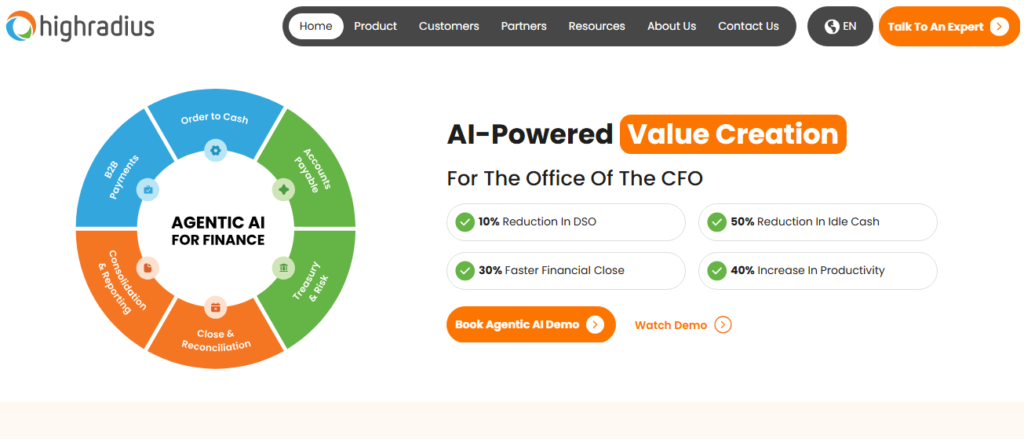
HighRadius is an AI-powered accounts receivable software that helps enterprises automate collections workflows, reduce manual follow-ups, and improve cash flow visibility. It brings collections automation, payment processing, customer communications, and receivables analytics all within a unified AR environment.
Key strengths:
- AI-driven collections prioritization: HighRadius uses AI models to prioritize accounts, predict payment behavior, and recommend next-best collection actions based on customer risk and payment patterns.
- Automated collections workflows: The platform automates reminders, follow-ups, dispute tracking, escalation workflows, and collector task management to reduce manual collections activity.
- Integrated cash application and payment workflows: Connects collections workflows with payment processing and cash application capabilities to improve reconciliation and receivables visibility.
- Collections analytics and forecasting: The platform provides dashboards, payment trend analysis, and cash flow forecasting tools to monitor collections performance and outstanding receivables.
- ERP integration support: HighRadius integrates with major ERP systems such as SAP, Oracle, and Microsoft Dynamics to centralize receivables and collections operations.
While HighRadius offers strong automation and receivables management capabilities, there are a few operational considerations to evaluate:
- Focuses more on AR automation and invoice collections than on consumer debt recovery operations.
- Complex customer engagement workflows may require additional communication and operational layers.
- Implementation can become resource-intensive in large ERP environments.
Best for: Enterprise finance teams managing large-scale accounts receivable and invoice collections operations.
7. Chaser
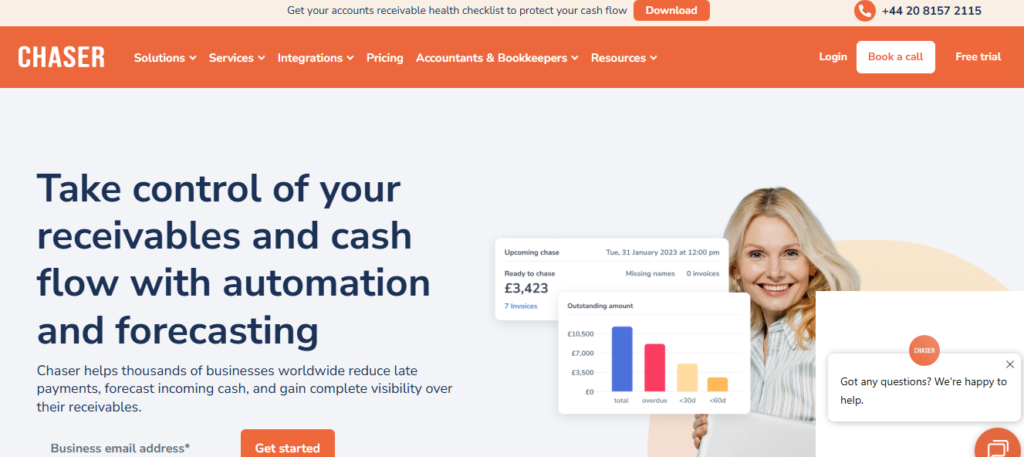
Chaser is an accounts receivable automation platform that helps businesses reduce overdue invoices, automate payment follow-ups, and improve payment collection efficiency. It helps finance teams standardize customer communication, improve visibility into outstanding balances, and reduce the time spent manually chasing payments.
Key strengths:
- Automated payment reminders: Chaser automates invoice reminders and follow-up workflows across email communication channels to reduce manual chasing activity.
- Accounts receivable visibility: The dunning software provides centralized visibility into outstanding invoices, payment status, customer balances, and overdue accounts through reporting dashboards and receivables tracking tools.
- Customer communication workflows: Chaser helps teams standardize collections communication and maintain more consistent customer outreach across invoice recovery workflows.
- Payment tracking and dispute management: The platform supports payment monitoring, dispute tracking, and follow-up coordination to help finance teams resolve invoices more efficiently.
- ERP and accounting software integrations: Chaser integrates with accounting and ERP platforms such as Xero, QuickBooks, and Sage, helping businesses centralize receivables and collections activity.
While Chaser offers strong invoice collections automation capabilities, there are a few operational considerations to evaluate:
- Focuses primarily on invoice recovery workflows rather than broader debt collections operations.
- Communication capabilities are more email-centric than omnichannel-focused platforms.
- Large-scale or compliance-sensitive environments may require additional operational support.
Best for: Mid-sized finance teams automating invoice reminders and accounts receivable follow-ups.
8. Kolleno
Kolleno is an accounts receivable and payment automation platform that helps businesses streamline invoice collections, customer payments, and credit control workflows. It improves payment recovery efficiency through automated reminders, self-service payment experiences, and centralized receivables management.
Key strengths:
- Automated receivables workflows: Kolleno automates invoice reminders, payment follow-ups, escalation workflows, and credit control activities to reduce manual collections efforts.
- Self-service payment portal: The platform provides customers with a digital portal to review invoices, manage payments, and resolve outstanding balances independently.
- Multi-channel customer communication: Kolleno supports payment communication via email, SMS, and customer portals to improve payment engagement.
- Cash flow and receivables visibility: The platform offers dashboards and reporting tools that help finance teams monitor outstanding balances, payment trends, and collections performance.
- Accounting and ERP integrations: Kolleno integrates with accounting and ERP systems to centralize receivables data and streamline finance operations.
While Kolleno offers strong receivables automation and payment workflow capabilities, there are a few operational considerations to evaluate:
- Focuses more on invoice collections and AR automation than broader debt recovery operations.
- Complex compliance-sensitive environments may require additional operational oversight.
- Communication capabilities are more payment-focused than full-scale collections platforms.
Best for: Mid-sized businesses automating invoice collections and customer payment workflows.
How to Choose the Right Digital Debt Collection Software Platform?
Choosing a debt management system is not just about automation features or communication channels. The bigger question is whether the solution can improve recovery performance while supporting compliance and operational scalability. Here’s what to evaluate:
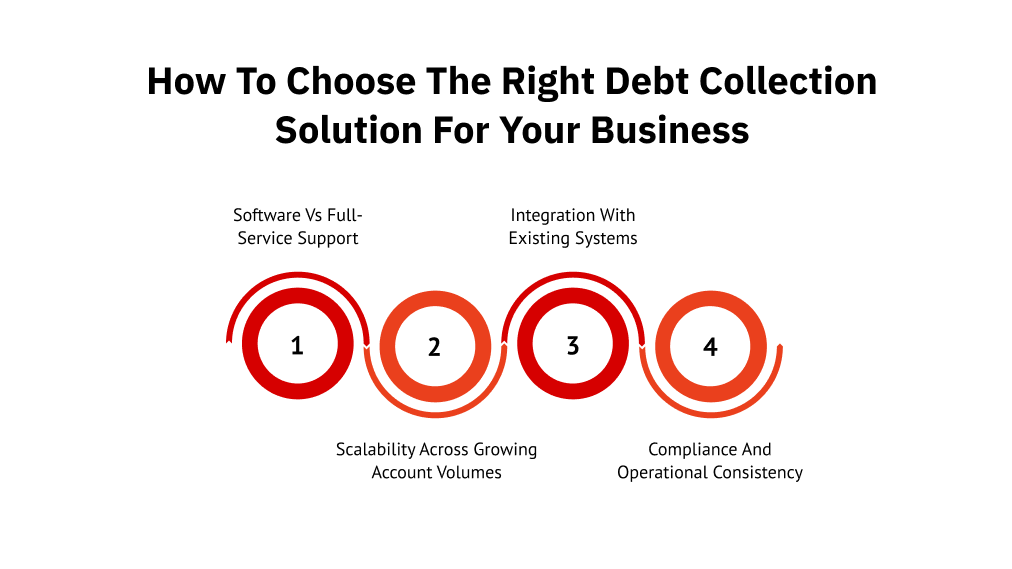
Software vs Full-Service Support
Software offers control but requires constant optimization and oversight. Full-service models combine technology with execution, helping businesses scale recovery efforts without overloading internal teams. Market Growth Reports 2026 found that banks’ outsourcing collections reduced costs by up to 37% while improving recovery rates by 19%.
To convert such figures into outcomes, execution-led partners like FCS combine digital collection infrastructure with support for recovery operations.
Scalability Across Growing Account Volumes
As delinquency portfolios grow, many internal teams struggle to maintain outreach consistency and prioritize accounts effectively.FCS addresses this through workflow automation, omnichannel communication support, and delinquency-based outreach.
The platform also supports managed recovery operations across both onshore and offshore recovery environments for seamless scalability.
Integration with Existing Systems
Collections platforms should integrate smoothly with CRM, billing, payment, and data systems to support real-time updates and consistent execution. According to the Global Growth Insights 2026 report, 49% of organizations face integration challenges with legacy systems.
FCS integrates directly with clients’ CRM and billing systems. This allows communication activity, payment updates, account notes, and transactions to sync in real time across collections workflows.
Compliance and Operational Consistency
Collections teams must maintain compliant communication practices across every interaction. As outreach volumes increase, managing this manually becomes harder.
FCS supports FDCPA-, CFPB Regulation F-, TCPA-, and FCRA-aware collections workflows through centralized communication tracking and compliance-focused outreach. The platform also supports SMS opt-in and opt-out management, audit visibility, and communication governance to reduce operational and compliance risk.
Scale Digital Debt Collection Without Overloading Internal Teams
Growing delinquency volumes and lower response rates are making collections harder to manage through traditional outreach methods alone. Many teams are struggling to maintain operational consistency while handling rising account backlogs and compliance requirements.
FCS helps organizations modernize collections through UCEP, a digital-first platform designed for scale and execution. It combines AI-driven engagement, omnichannel communication, self-service payments, and managed recovery support into a single integrated system.
For businesses dealing with growing account backlogs, inconsistent recoveries, or operational strain, this approach provides a more scalable, execution-focused way to improve collections performance.
Book a demo to see how UCEP fits into your collections strategy.
FAQs
1. What is debt collection software, and how does it work?
It is a platform that automates collections workflows, such as reminders, follow-ups, and account tracking. It helps teams manage receivables, prioritize accounts, and monitor recovery performance.
2. What features should you look for in debt collection software?
Look for workflow automation, segmentation and prioritization, omnichannel communication, payment integration, reporting, and compliance controls.
3. What is the difference between debt collection software and a recovery agency?
Software provides tools for your team to manage collections, while a recovery agency handles execution and recovery on your behalf.
4. How does AI improve debt collection processes?
AI helps prioritize accounts, predict the best time and channel for outreach, and personalize communication to improve recovery rates.
5. Is debt collection software compliant with regulations?
Most tools include compliance features, but actual compliance depends on how workflows are configured and executed.
6. When should a business use debt collection software?
Use it when you need to automate collections and have the internal capacity to manage workflows, monitor performance, and optimize strategies.
